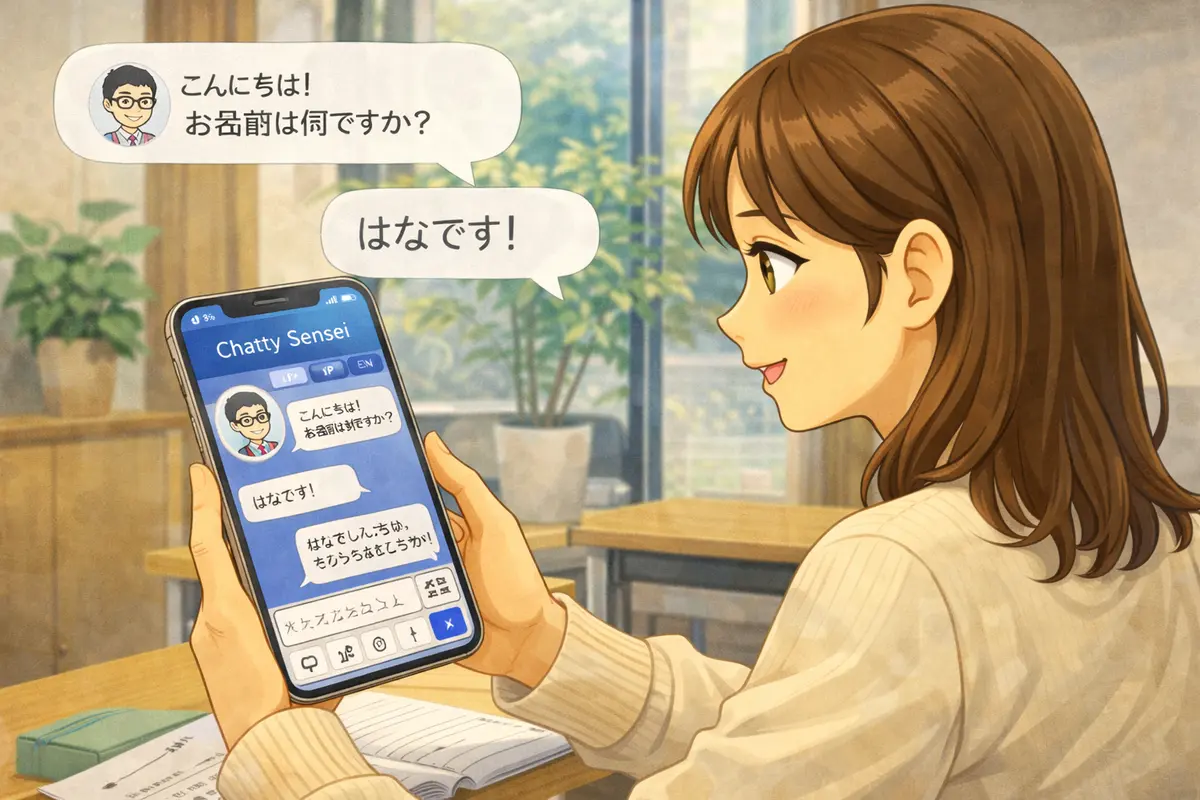
The Top 10 Survival Japanese Phrases When Meeting Someone for the First Time
January 13, 2026

In Japan, first meetings often follow a friendly but polite rhythm: greeting → name → simple context (work/where you’re from) → light small talk → nice closing. The phrases below are the “default” lines that work almost anywhere: business, friends-of-friends, school, neighbors, events.
The Top 10 Survival Japanese Phrases for First Meetings
1) “Nice to meet you.”
Japanese: はじめまして。
Romaji: hajimemashite.
Use it when: The very first words after hello.
2) “I’m ~.”
Japanese: 〜です。
Romaji: ~ desu.
Use it when: Saying your name simply.
More polite / common
Japanese: 〜と申(もう)します。
Romaji: ~ to mōshimasu. (I’m called ~ / My name is ~.)
3) “Please treat me well.” (standard)
Japanese: よろしくお願(ねが)いします。
Romaji: yoroshiku onegai shimasu.
Use it when: Right after your name—this is the classic first-meeting phrase.
Slightly more formal
Japanese: どうぞよろしくお願(ねが)いします。
Romaji: dōzo yoroshiku onegai shimasu.
4) “Thank you for taking the time today.”
Japanese: 今日(きょう)はお時間(じかん)いただき、ありがとうございます。
Romaji: kyō wa ojikan itadaki, arigatō gozaimasu.
Use it when: Business-ish meetings, introductions at work, appointments.
Casual alternative
Japanese: 今日(きょう)会(あ)えてうれしいです。
Romaji: kyō aete ureshii desu. (I’m happy to meet you today.)
5) “Where are you from?”
Japanese: ご出身(しゅっしん)はどちらですか?
Romaji: goshusshin wa dochira desu ka?
Use it when: Light, safe small talk.
Simpler
Japanese: どこ出身(しゅっしん)ですか?
Romaji: doko shusshin desu ka?
6) “What do you do for work?”
Japanese: お仕事(しごと)は何(なに)をされていますか?
Romaji: oshigoto wa nani o sarete imasu ka?
Use it when: Networking, adult small talk, meeting parents, etc.
More casual
Japanese: お仕事(しごと)は何(なに)ですか?
Romaji: oshigoto wa nani desu ka?
7) “I live in ~.”
Japanese: 〜に住(す)んでいます。
Romaji: ~ ni sunde imasu.
Use it when: Someone asks where you live, or you’re continuing small talk.
Example
Japanese: 東京(とうきょう)に住(す)んでいます。
Romaji: Tōkyō ni sunde imasu.
8) “I’ve been in Japan for ~ years/months.”
Japanese: 日本(にほん)に来(き)て〜年(ねん)/〜か月(げつ)です。
Romaji: Nihon ni kite ~ nen / ~ kagetsu desu.
Use it when: Very common first-meeting question and a great conversation starter.
Example
Japanese: 日本(にほん)に来(き)て2年(ねん)です。
Romaji: Nihon ni kite ni-nen desu.
9) “I’m still learning Japanese.”
Japanese: まだ日本語(にほんご)が勉強中(べんきょうちゅう)です。
Romaji: mada nihongo ga benkyō-chū desu.
Use it when: You want to set expectations (and people usually become extra kind).
Add-on
Japanese: ゆっくり話(はな)していただけると助(たす)かります。
Romaji: yukkuri hanashite itadakeru to tasukarimasu. (If you could speak slowly, it helps.)
10) “It was nice meeting you.”
Japanese: お会(あ)いできてよかったです。
Romaji: oai dekite yokatta desu.
Use it when: Ending the conversation politely.
More casual
Japanese: またお会(あ)いしましょう。
Romaji: mata oai shimashō. (Let’s meet again.)
Ready-to-Use First Meeting Script (Copy & Practice)
You: はじめまして。
(hajimemashite. - Nice to meet you.)
You: マリンと申(もう)します。よろしくお願(ねが)いします。
(Marin to mōshimasu. yoroshiku onegai shimasu. - My name is Marin. Pleased to meet you.)
You: 今日(きょう)はお時間(じかん)いただき、ありがとうございます。
(kyō wa ojikan itadaki, arigatō gozaimasu. - Thank you for your time today.)
You: ご出身(しゅっしん)はどちらですか?
(goshusshin wa dochira desu ka? - Where are you from?)
You: 私(わたし)は東京(とうきょう)に住(す)んでいます。
(watashi wa Tōkyō ni sunde imasu. - I live in Tokyo.)
You: まだ日本語(にほんご)が勉強中(べんきょうちゅう)です。
(mada nihongo ga benkyō-chū desu. - I am still studying Japanese.)
You: お会(あ)いできてよかったです。
(oai dekite yokatta desu. - It was nice meeting you.)
Safe Small Talk Topics in Japan (Quick Ideas)
Easy follow-up questions
Japanese: 休日(きゅうじつ)は何(なに)をしていますか?
Romaji: kyūjitsu wa nani o shite imasu ka? (What do you do on weekends?)
Japanese: この辺(へん)によく来(き)ますか?
Romaji: kono hen ni yoku kimasu ka? (Do you come around here often?)
FAQs: First Introductions in Japanese
What’s the difference between 〜です and 〜と申(もう)します?
Japanese: 〜ですは普通(ふつう)、〜と申(もう)しますは丁寧(ていねい)です。
Romaji: ~ desu wa futsū, ~ to mōshimasu wa teinei desu.
Use 申(もう)します in more formal settings (work, clients, important first meetings).
Do I really need よろしくお願(ねが)いします?
Japanese: はい、よく使(つか)います。
Romaji: hai, yoku tsukaimasu.
It’s the standard “nice to meet you / please be kind to me” phrase in Japan—very safe and expected.
How do I say “Sorry, my Japanese isn’t good” politely?
Japanese: 日本語(にほんご)がまだ上手(じょうず)じゃなくて、すみません。
Romaji: nihongo ga mada jōzu janakute, sumimasen.