How to Improve Your Japanese Speaking Skills (and Actually Start Using the Language)
January 14, 2026
Many Japanese learners share the same frustration:
“I can read. I can understand. But when it’s time to speak… my mind goes blank.”
If that sounds familiar, you’re not alone. Speaking is often the hardest skill to develop—not because Japanese is impossible, but because speaking requires active use, not passive knowledge.
The good news? Japanese speaking skills can be improved, and often much faster than people expect—if you practice the right way.
This article breaks down what really works: frequent speaking, shadowing, spaced repetition, and how modern tools can help you practice Japanese anytime, anywhere, in real-life situations.
Why Speaking Is the Most Important (and Most Neglected) Skill
You don’t learn to speak Japanese by studying Japanese.
You learn to speak by speaking.
Many learners spend years:
All of this helps—but none of it replaces actually opening your mouth and producing Japanese.
Speaking trains:
Without speaking practice, your Japanese stays “locked” in your head.
Practice as Often as Possible (Even in Short Bursts)
One of the biggest myths in language learning is that you need long study sessions.
In reality, frequency matters more than duration.
Why short, frequent speaking works
Even 5–10 minutes a day of speaking Japanese is more effective than one long session per week.
Think of it like exercise:
The key is removing friction so speaking becomes part of your routine.
Shadowing: One of the Fastest Ways to Sound Natural
Shadowing is a powerful technique used by interpreters and advanced learners.
What is shadowing?
You listen to Japanese audio and repeat it out loud immediately, matching:
You don’t pause. You don’t translate. You just follow.
Why shadowing works
At first, it feels uncomfortable—and that’s normal. But after a few weeks, your Japanese will start sounding noticeably smoother.
Best content for shadowing
Consistency is more important than perfection.
Build Speaking Power with Spaced Repetition
Knowing words once is easy.
Remembering them when speaking is the real challenge.
That’s where spaced repetition comes in.
Why spaced repetition matters
But here’s the mistake many learners make:
They only memorize single words.
What works better than single words
For example:
❌ 見る (to see)
✅ ちょっと見てもいいですか?
When you memorize sentences, you’re learning ready-to-use Japanese.
Practice Speaking in Real-Life Situations
Speaking improves fastest when practice feels real.
Instead of abstract drills, focus on:
This kind of practice:
The more realistic the situation, the easier it becomes to speak when it actually matters.
Why Having the Right App Makes a Huge Difference
Let’s be honest—not everyone has:
This is where having a smart practice environment changes everything.
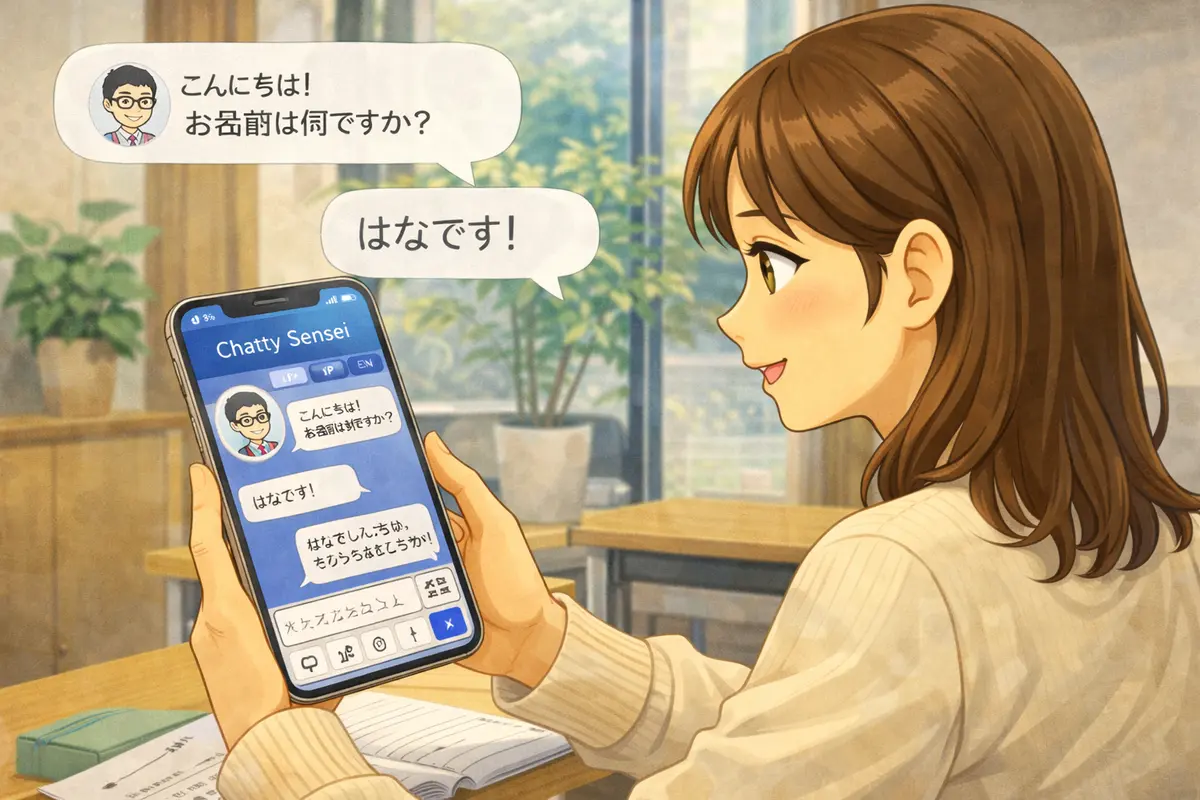
An app like Chatty Sensei makes speaking practice:
Instead of passively studying, you actively talk—whether you have two minutes on the train or a longer session at home.
Practice Anytime, Anywhere, Without Pressure
One of the biggest barriers to speaking Japanese is fear of making mistakes.
When you practice in a private, judgment-free environment:
Chatty Sensei allows learners to practice speaking:
No schedules. No awkward silences. Just consistent speaking practice.
Train for Any Real-Life Situation
Japanese changes depending on context:
Practicing random sentences isn’t enough.
Chatty Sensei lets learners train through hundreds of real-life scenarios, such as:
This kind of targeted practice prepares you for actual conversations, not just tests.
Consistency Beats Talent Every Time
You don’t need perfect pronunciation.
You don’t need advanced grammar.
You don’t need hours of free time.
You need:
When speaking becomes part of your daily routine—even in small amounts—your Japanese will improve naturally.
Final Thoughts: Speak First, Improve Faster
Improving your Japanese speaking skills isn’t about studying harder—it’s about speaking sooner and more often.
Use techniques like:
And most importantly, make speaking easy to access.
With tools like Chatty Sensei, you can practice Japanese:
The more you speak, the faster Japanese stops feeling like a subject—and starts feeling like a language you actually use.